Smart House Technology
This page features news about smart house technology, energy saving devices, smart thermostat, wireless light switch and cloud storage.
A thermostat controls the energy used in a home. It controls the heating, ventilation, and air conditioning.
When Tony Fadell was building an energy efficient, environmentally friendly, green dream home, he couldn't find the thermostats he wanted.
He discovered that the technology for thermostats was archaic. They didn't have the features and benefits of modern technology.
For a device that controls energy - it wasn't smart - it didn't use smart house technology and it wasn't an energy saving device.
A recent study conducted by the Berkeley National Laboratory found that half of the programmable thermostats installed in homes are never programmed because they're not user friendly. Even if they were programmed - they're not efficient.
As a result of this inefficiency, thermostats are excluded from Energy Star labeling. This is astonishing when you consider these devices are supposed to control heating and cooling systems.
Smart Thermostat
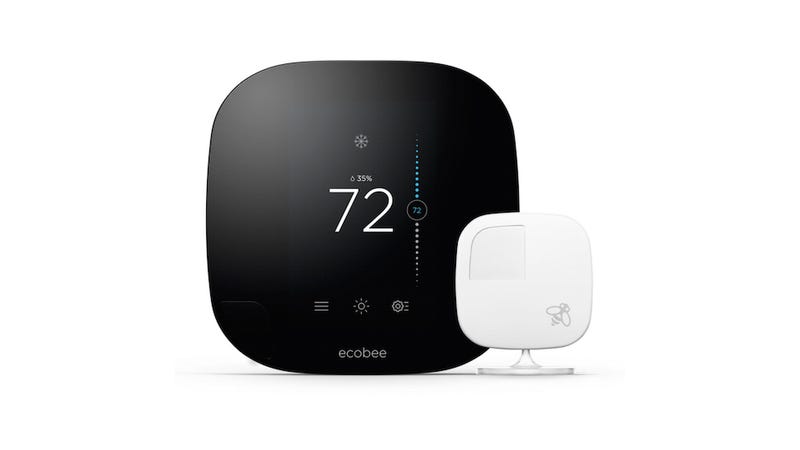
With today's advanced technology, Fadell wondered why thermostats can't communicated with one other. He wondered why they don't collect and analyze information about energy consumption. "Why can't they program themselves to efficiently control energy in the home?" he asked.
According to Fadell, there are hundreds of millions of thermostats in homes and commercial spaces that haven't changed much since the 1970's and every year millions more of these same thermostats are installed.
"Thermostats are made for contractors - not consumers," says Fadel, "There is no incentive to innovate."
Fadell knows something about innovation and smart technology.
He is a computer science engineer responsible for developing numerous technologies and devices - the most famous being the iPod. He ran the iPod and iPhone divisions for Apple.
So Fadell, together with a team of engineers, designers and computer scientists, began developing a new thermostat called 'Nest'.
Nest is a thermostat that utilizes artificial intelligence and learns from manual adjustments.
It uses sensors to detect room temperatures and whether a room is occupied or not. It can interact with you directly or communicate with you over the internet through a smartphone or tablet. Information about your energy use is kept in cloud storage so users can track their energy consumption.
Nest has an elegant design - a circular stainless steel device with a colored digital display. " I want it to be a jewel on the wall so that it’s a conversation piece," says Fadell.
It's a smart thermostat with sophisticated cutting edge technology, which Fadel estimates will save consumers 30 percent on their utility bills.
Update: Since featuring Fadell's invention, Google has acquired the product for $3.2 billion. The purchase is twice as much as Goggle paid to acquire Youtube.
The investment represents Google's interest in providing internet connected homes where all manner of functions can be controlled with a smartphone application.
Sources: nest.com; nytimes.com; gigaom.com
Wireless Light Switch

A nanogrid wireless light switch made by Frostdale has won the Red Dot Award - an international product competition.
The benefit of a wireless light switch is that you can use a switch or a remote to control your lights. The Frostdale light switch has a remote that provides users with features for estimating lighting costs and energy consumption.
It also features energy and temperature sensors compatible with other smart house technology devices.
Sources: frostdale.com
Smart House Technology
Smart house technology is full of possibilities. Smart ovens that run themselves - cooking your food and texting you when it' s ready.
Appliances that respond to the mere wave of your hand, follow your verbal instructions, or read text messages sent from your smartphone.
How about telling your house when to unlock the door for a plumber, or having your bathroom scale display a historical record of your weight.
What if every electrical device in your home communicated with every other electrical device in your home - and they all could communicate with you.
All these things are possible and smart house technology is just getting started.


 An orthopedic surgeon has invented a cool new gadget for relieving lateral epicondylitis - commonly known as tennis elbow.


